Key points
- TPU 8tx enables confidential model training with hardware-level security isolation.
- TPU 8i Max doubles memory and processing power of the April-launched TPU 8i.
- The launch aims to reduce reliance on third-party chipmakers like Nvidia.
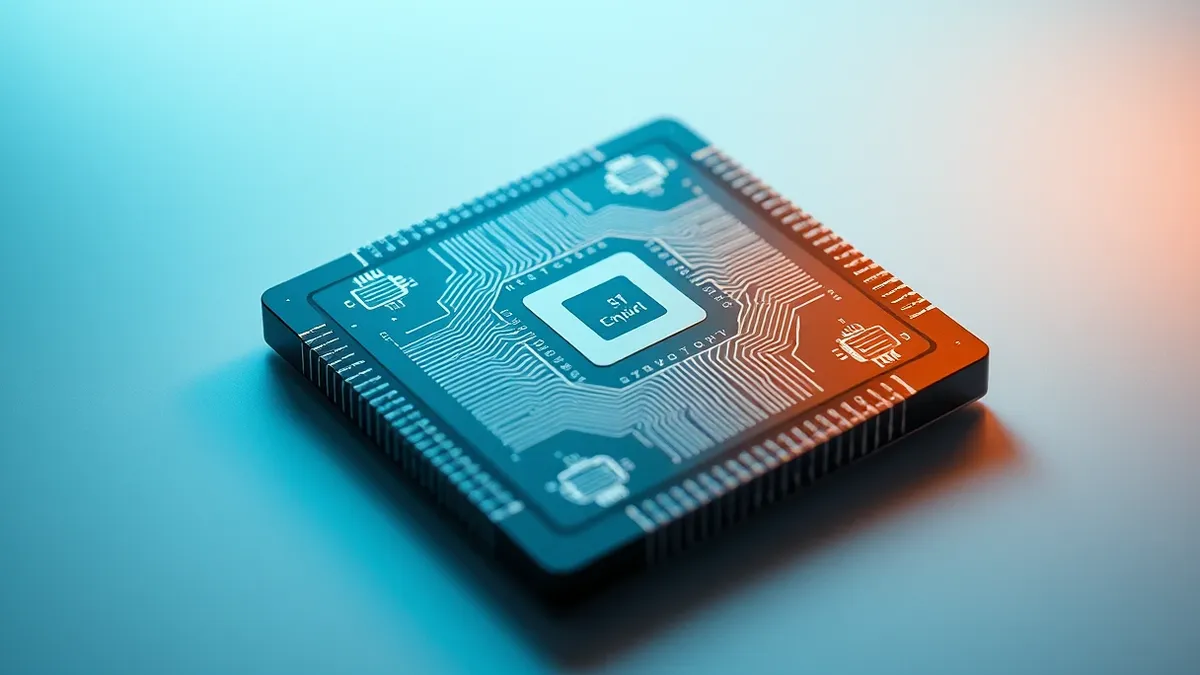
Google announced two new tensor processing unit variants on Monday, expanding its in-house AI chip portfolio to address confidential training and high-memory inference needs. The company stated that these additions build upon the eighth generation of chips introduced in April, which focused on inference capacity and large training support.Google released two new AI chips to handle secure training and larger data tasks more efficiently.Google expanded its TPU 8 portfolio with TPU 8tx for confidential training and TPU 8i Max for doubled inference memory. According to TechCrunch, the move is part of a broader strategy to lessen dependence on external semiconductor suppliers for its cloud business.reported
The claim
Google described the TPU 8tx as a chip designed with AMD specifically for confidentially training and running AI models.reported In a blog post, the company said the hardware builds security directly into the layer, keeping sensitive data and model weights protected and isolated even during active use. The chip features a custom inferencing network that allows reasoning alongside training. Google noted this capability could help companies distill and train small models on the fly using proprietary data without moving it between devices.
Evidence: reported
Google broadens its AI hardware portfolio with two new specialized chipsaifleet-techcrunch-all
The response
The TPU 8i Max combines two of the inference-focused TPU 8i chips launched in April into a single package.reported This design doubles the memory capacity, processing power, and bandwidth compared to the original TPU 8i.reported The result is a chip that allows AI models to handle a larger range of information during queries, according to Google's description of the hardware specifications.reported
Evidence: reported
Google broadens its AI hardware portfolio with two new specialized chipsaifleet-techcrunch-all
Evidence: reported
Google broadens its AI hardware portfolio with two new specialized chipsaifleet-techcrunch-all
Evidence: reported
Google broadens its AI hardware portfolio with two new specialized chipsaifleet-techcrunch-all
Why this matters now
The chip launch coincides with efforts by hyperscalers like Microsoft and Amazon, as well as AI labs like OpenAI and Anthropic, to develop their own AI-specific semiconductors. These companies are working on accompanying software to reduce reliance on Nvidia's dominance in the market. TechCrunch reported that this news arrives during a vulnerable period for Nvidia, whose CEO Jensen Huang recently admitted to an affair with someone alleged to be a Chinese spy.reported
What buyers should weigh
Enterprise IT buyers should consider the TPU 8tx if their workflows require training models on proprietary data without external data movement.reported The hardware-level isolation may address security concerns for sensitive workloads. For inference-heavy tasks, the TPU 8i Max offers doubled memory and bandwidth in a single package, potentially simplifying infrastructure for large queries.reported Buyers must evaluate whether Google's ecosystem integration offsets the reduced flexibility of moving away from Nvidia-dominant hardware stacks.
Evidence: reported
Google broadens its AI hardware portfolio with two new specialized chipsaifleet-techcrunch-all
Evidence: reported
Google broadens its AI hardware portfolio with two new specialized chipsaifleet-techcrunch-all
Why it matters
- Hardware-level security in TPU 8tx may reduce data exfiltration risks for proprietary model training.
- TPU 8i Max memory doubling could lower infrastructure costs for large-context inference queries.
- Diversifying away from Nvidia may improve supply chain resilience for cloud providers.
- Competing hyperscalers developing custom chips may increase vendor choice for enterprise buyers.
Topics: AI hardware, Google, TPUs, confidential computing, semiconductors
Updated
Then / now / next
Google's eighth-generation TPUs focused on inference capacity and large training support.
Google added TPU 8tx for confidential training and TPU 8i Max for higher memory capacity.
Watch for adoption rates as hyperscalers develop their own AI-specific semiconductors.
Story timeline
- Then Google's eighth-generation TPUs focused on inference capacity and large training support.
- 10 Nov 2026 Google broadens its AI hardware portfolio with two new specialized chips
- Now Google added TPU 8tx for confidential training and TPU 8i Max for higher memory capacity.
- Next Watch for adoption rates as hyperscalers develop their own AI-specific semiconductors.
The strongest doubt
Counterpoint from the sources
The market dominance of Nvidia remains a significant barrier, despite efforts by competitors to develop alternative semiconductors.
For readers
Developers
- TPU 8tx allows on-the-fly distillation and training of small models on proprietary data.
- TPU 8i Max supports larger information ranges during AI model queries.
Business
- Hardware-level security may reduce risks associated with moving sensitive data between devices.
- Reducing reliance on Nvidia could diversify supply chain risks for cloud services.
Investors
- Google aims to reduce dependence on third-party chipmakers for its cloud business.
- Competitors like Microsoft and OpenAI are also developing AI-specific semiconductors.
Ask the article
Local keyword search of this article; no generated answers.Did this article give you the evidence you needed?
Your choice stays on this device. No public tally.Questions readers ask
What is the TPU 8tx used for?
It is designed for confidentially training and running AI models with hardware-level security isolation.
How does TPU 8i Max differ from TPU 8i?
It combines two TPU 8i chips into one package, doubling memory, processing power, and bandwidth.
Why is Google launching these chips now?
To reduce dependence on third-party chipmakers and address specific use cases like confidential training.
Connected stories
Reading receipt
- TPU 8tx enables confidential model training with hardware-level security isolation.
- TPU 8i Max doubles memory and processing power of the April-launched TPU 8i.
- The launch aims to reduce reliance on third-party chipmakers like Nvidia.
Still open: How will the performance of TPU 8tx compare to existing confidential computing solutions?
Still open: Will other hyperscalers adopt similar hardware-level security features for AI training?